

Does Phone Have To Have 720 X 1280 To Work With Pokemon Go
It'due south World War Two. Across Europe, Northward Africa and Mainland china, resistance groups and partisan revolutionaries are battling fascists who have occupied their countries. In Greece, a man sends a report of Nazi troop movements to the Allies. In Tunisia, Nazi supply lines are disrupted and communications links are damaged. In Communist china, the advance of Japanese troops is delayed by the destruction of a munitions depot. In French republic, a railyard is destroyed, slowing the movement of Nazi troops in response to the Allied invasion of Normandy.
The world-spanning secret agents and deadly commandos who committed these acts share a secret link — they were all trained at a sprawling facility for spies and saboteurs on the shore of Lake Ontario in Ontario, Canada. The school, which the British created to railroad train Americans and Canadians in the art of special operations behind enemy lines, was such a secret that even Canadian Prime Minister Mackenzie King didn't know nigh it when it was created. It was known as Army camp X.
The story of Camp X was hidden for decades. What went on there, and what the campsite'southward trainees would go on to do, rivaled the most daring exploits of fictional secret agents. How the camp was created and its part in the creation of U.S. intelligence organizations is a fascinating and overlooked tale of World War Ii.
The British Connectedness
In 1941, the U.Due south. was officially neutral regarding World War Ii. Although President Roosevelt wanted to assist Britain in the battle against Nazi Federal republic of germany and the other Axis powers, isolationist pressure prevented an official announcement of state of war. At the same time, Roosevelt realized that the U.South. needed some class of intelligence bureau to gather information on the nation's enemies and gainsay enemy agents who might be working inside the U.Southward. Merely building an intelligence organization from scratch was a near incommunicable chore. The British had vastly more than feel training intelligence operatives, which could give American intelligence and espionage a massive jump-start. Simply neutrality meant that kind of cooperation couldn't occur in whatsoever official capacity.
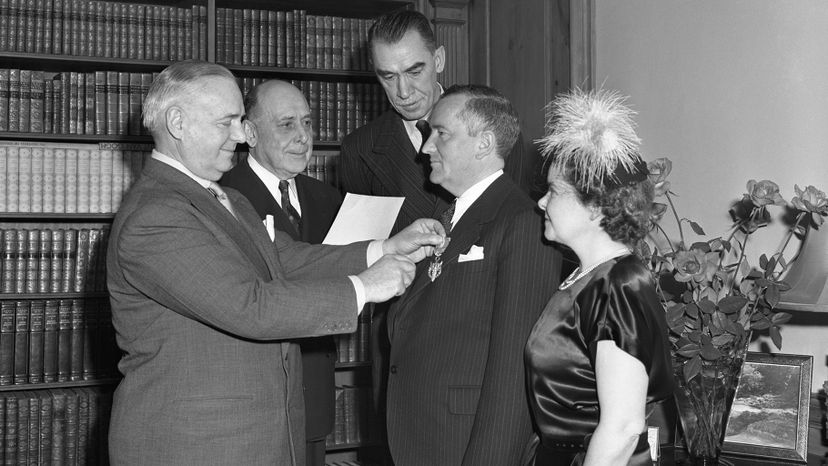
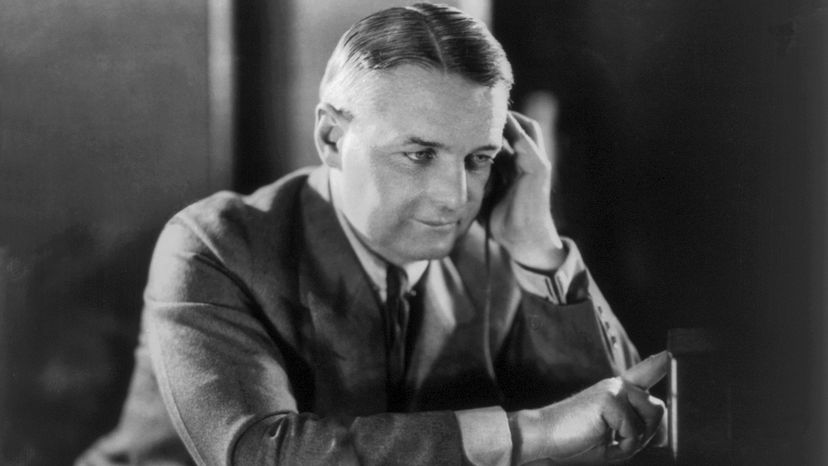
Thus, an arrangement called British Security Coordination (BSC) gear up upward shop in Rockefeller Center in New York City in 1940, in an office labeled innocuously equally "British Passport Control." Even so, information technology functioned as a liaison between the Special Operations Executive (SOE) — a major British intelligence and espionage system — and the U.Due south. officials leading the creation of American intelligence organizations. William Stephenson, a Canadian who had served Britain as a fighter airplane pilot in World War I, headed BSC.
Canada was function of the Commonwealth (and still is), and there was some tension between the genuine Canadian desire to back up British war efforts and an equally genuine Canadian desire to become to state of war as an independent nation. And then, Canada was an ideal place for British SOE operatives to railroad train American intelligence agents, although word of that plan didn't achieve Prime Minister Mackenzie King until the camp was well-established, for fears that he might forbid the whole project [source: Stafford].
Under Stephenson's direction, a Vancouver businessman named A.J. Taylor purchased 260 acres (105 hectares) of state near Oshawa, Ontario, for $12,000 nether the camouflaged name "Rural Realty Visitor, Ltd." The property had varied terrain, including open fields, dense woodland, a swamp and a rocky length of Lake Ontario shoreline. It was home to a farmhouse and some storage buildings, to which were added barracks, classrooms and a building to house radio equipment [source: Bicknell]. The fields and orchards led the camp'southward students and staff to refer to the facility but as "The Farm," although it was officially designated a Special Training School, STS 103. It opened for operations on Dec. six, 1941. The next day, Japan attacked Pearl Harbor, and the U.S. fully entered the war.
Meanwhile, American intelligence activities were being consolidated under the Office of the Coordinator of Information — an intelligence agency formed past President Franklin Roosevelt — which became the Office of Strategic Services (OSS) in 1942. The OSS was the precursor to today's CIA. Simply intelligence organizations were pointless unless they could apply trained secret agents. That'southward where Campsite Ten came in.
Grooming at Campsite X
The British gained experience in guerilla warfare and commando operations in their dealings with the sprawling British empire, in far-flung locales such as Turkey and closer to home, battling nationalists in Ireland. Their well-established system of training operatives was condensed into a training regimen lasting three to four weeks at Camp X [source: Stafford]. There was no single curriculum for training at the camp — instructors adjusted the program for each grouping of trainees, based on where they were headed and what they'd be doing there. Operatives destroying bridges with the French Resistance would face far different atmospheric condition than agents gathering information on troop movements in North Africa.
Some types of training were integral to the Camp 10 experience no thing the mission. Everyone learned to read and make maps, motion silently, hide well and look inconspicuous. Recruits learned to burn down guns, but instead of the careful marksmanship of most war machine training, they were taught "instinctive gunfighting," the power to aim and burn down at a moment'southward discover without using a practiced opinion or fifty-fifty looking down the sights. They all learned close combat so they could defeat guards and other enemies if using a gun wasn't possible or would make too much noise.
Demolitions preparation was another Military camp Ten grooming cornerstone. In fact, the frequent detonations acted as a cover — the camp looked similar a facility for training and experimenting with explosives to nearby residents (of which there were not very many) [source: Stafford]. Trainees could also receive instruction in forging documents, creating and spreading propaganda and harnessing the unrest of local militia groups to fight the Nazis.
Lt. Col. Bill Brooker was non the starting time commandant of Army camp X (Arthur Terence Roper-Caldbeck was), but he was the most influential. He enforced a strict armed services code of discipline and brought with him a wealth of experience in training agents at SOE schools in the U.Chiliad. Brooker knew his agents had to exist prepare for anything, so he engaged in unorthodox training methods, like interrupting students' classroom sessions with mock gun battles then making them recall facts about the incident, such as the number of shots fired or what the assailants were wearing. Students undertook mock missions, infiltrating a guarded house or sneaking through the damp Ontario night.
Former Shanghai policeman Maj. Dan Fairbairn was only briefly in charge of shut gainsay training at Camp X, merely his methods took hold and he went on to train Americans in the U.S., where his influence was cemented. Fairbairn's idea of shut gainsay was simple: No method was out of bounds, and your sole goal was to kill your opponent as quickly as possible. The silent kill was Fairbairn's specialty — he even developed a commando pocketknife that military forces still utilize today — only he too promoted the use of eastern martial arts methods or a swift kick to an enemy's testicles to win a fight.
Much of the Camp X doctrine was distilled into a training manual, which included details on how to hide in trees, how to spy on someone using binoculars and how to impale a man by chopping the back of his neck with the side of your paw [source: Rigden]. The men who were trained at Camp X went on to achieve spectacular exploits and attain influential positions. Nosotros'll meet some of them side by side.
Notable Alumni of Camp Ten
We've already mentioned the influence Bill Brooker and Dan Fairbairn had on Camp Ten and undercover agent training methods. Just several other notable men were involved with Camp X. (No women were ever trained in that location, although women did play an of import role at the military camp and in the state of war effort, which nosotros'll talk over shortly). The most famous was Bill Donovan, who was deeply involved in the efforts to create a U.S. espionage organization and constitute Camp X. Donovan was the coordinator of information and the first caput of the Part of Strategic Services. He lobbied strongly for the establishment of the CIA after the war, although he never worked straight for the bureau.
John Bross, a Camp X graduate, influenced American intelligence for decades. He went through the Camp Ten training course in 1942 and afterwards oversaw teams parachuting behind Nazi lines to support the D-Day invasion, when the Allies invaded Normandy, France in June 1944. He worked in the CIA for twenty years, rising to get deputy to the director of central intelligence for programs evaluation. Some Camp X trainees went on to work for the CIA, while others used their training to, in plough, train other Americans at newly established American undercover amanuensis schools [source: Chambers].
Gustave Biéler is 1 of the more well-known Camp X graduates. He was a French-Canadian (literally — he was built-in in France and emigrated to Canada), considered an exemplary pupil of sabotage and resistance coordination. While Biéler was infrequent in his abilities, many Campsite X trainees took incredible risks to consummate their missions. Here are some of the ways Biéler put his Army camp X preparation to employ [source: Clibbon]:
- Paradrop training allowed Biéler to parachute into France behind German language lines, although he landed on rocks and injured his spine.
- Leadership training helped him organize the French Resistance in the Saint-Quentin region, directing their missions and pedagogy them some of his espionage skills.
- Propaganda grooming enabled Biéler to recruit locals to his cause. Local workmen often assisted in his sabotage efforts. For example, he gave railroad workers annoying grease to make railroad train wheels fail.
- The stealth skills taught at Camp X immune Biéler and his teams to sneak into railyards, industrial facilities and warehouses without being spotted.
- The silent kill techniques Dan Fairbairn taught were crucial when Biéler encountered Nazi guards while on a demolition mission.
Ultimately, the Nazis captured Biéler after a long and extensive search and several near-misses. He was sent to a concentration military camp and executed, which wasn't unusual for Campsite X trainees in the war. Often more than half of a preparation unit would die during a mission [source: Bicknell].
But secret agent training wasn't the but thing that happened at Military camp X. Hydra radio was a cardinal link in the Allied communications network during Globe State of war II.
There is a confirmed Bond connection, though. Paul Dehn was a member of the Camp X staff and may have had a hand in writing the infamous army camp manual [source: Bicknell]. Dehn later on wrote several well-known screenplays, including that of the James Bond pic "Goldfinger."
Hydra Radio
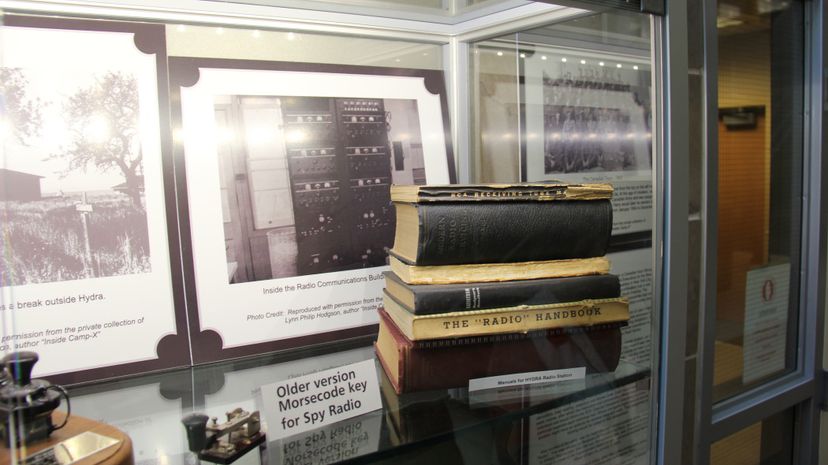
No, Hydra radio was not a nonstop broadcast aimed at the bad guys in Marvel movies. It was a powerful radio station housed at Camp X that sent and received primal intelligence data the Allies used during World State of war II. Radio equipment was scarce during the war, so British and Canadian agents procured what they needed from private companies and citizens. The main transmitter came from a Philadelphia radio station, while additional equipment was requisitioned from apprentice radio operators, some of whom worked at the army camp to operate the equipment. The radio station got the proper noun Hydra from the multiple transmitting antennae protruding from the banking concern of sophisticated (for its time) radio gear.
There were some Canadian women who operated Hydra. The billet at Campsite X were never intended to business firm both men and women, so the Hydra operators stayed with nearby families, getting picked up and dropped off by a staff machine, co-ordinate to i female operator'south account. They had limited interaction with the rest of the camp [source: Stafford].
That doesn't hateful their work wasn't valuable, however. Hydra played a vital office in maintaining the flow of information from Centrolineal outposts in Europe with command centers in the U.K. and America. The radio station was equipped with a Rockex auto, an ingenious device adult by engineer Pat Bayly that automated the encryption and decryption of letters. These were Allied messages encoded to avoid enemy interception — Hydra was never used to decode intercepted German or Japanese transmissions. Notwithstanding, because of the way radio waves move through the atmosphere in different weather conditions, Hydra was sometimes used to intercept signals from the Centrality powers that couldn't exist picked up past receivers in the U.G. These transmissions were so sent to places like Bletchley Park, a site for British codebreakers, for decoding.
The Hydra Station remained open up after Earth War 2, merely Army camp X closed earlier the state of war was over. Despite beingness the starting time special agent training schoolhouse in Due north America, the site was not preserved. What the Canadian regime did with Camp X afterward the state of war is pretty surprising.
Camp 10 After World War Ii
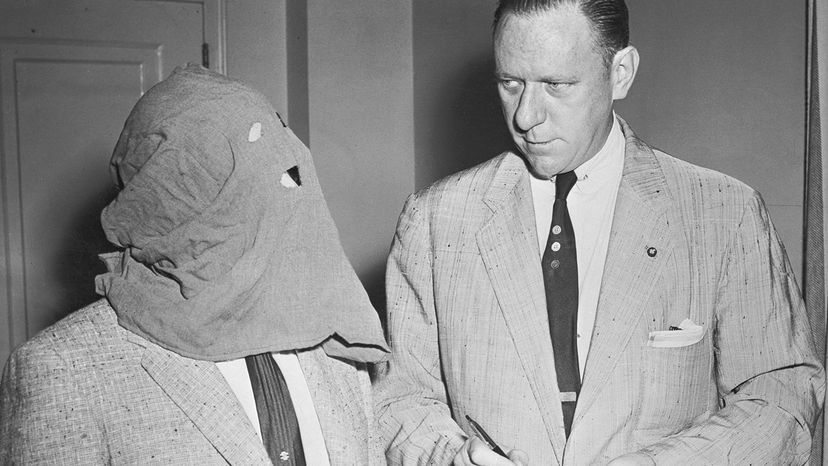
Military camp 10 closed in April 1944. Information technology had served its purpose, and the personnel were needed elsewhere. The instructors returned to Great britain or the U.S., and the Canadian staff moved on to other jobs in Canada. Information technology's impossible to know how many men were trained in that location — records were kept hole-and-corner, destroyed or scattered across three different nations' bureaucracies — but estimates range from a few hundred to ii,000 or 3,000 [source: Montgomery]. The campsite'due south training regimen became so infamous and prestigious that far more than men claimed to have trained there than actually did.
Even so, the buildings nevertheless existed afterwards the military camp closed, and they found some use during the Cold War. Immediately after the finish of the Globe War II, a cypher clerk named Igor Gouzenko defected from the Soviet Union to Canada, bringing with him data on Soviet secret agents. British and American intelligence officials interviewed him at Camp X, where he was condom from potential interference from Soviet agents.
Command of the Hydra station was transferred to the Canadian military. Hydra functioned as a signal intercepting station as the final months of Globe War II played out against Japan, and it was used to intercept Soviet radio transmissions during the early years of the Cold War. By 1969, the station's equipment was no longer sophisticated, and the site was officially decommissioned and sold to local municipal governments.
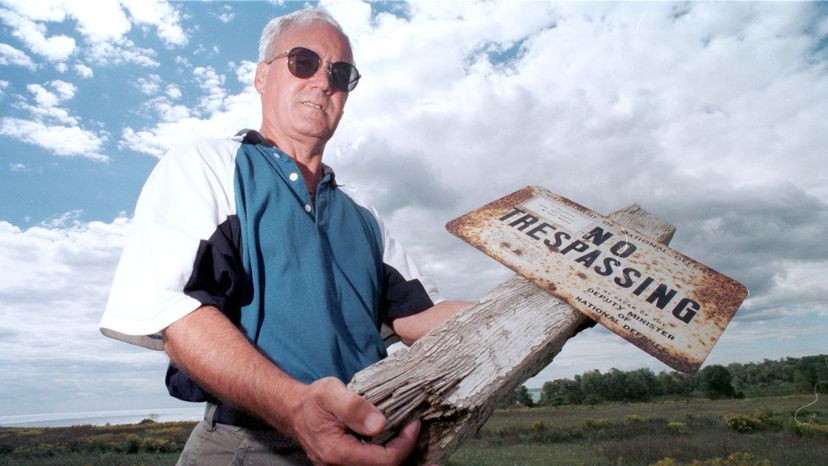
Amid concerns that the camp might contain unexploded ordnance (weapons that did not explode but still pose a risk of doing so) from all the explosive preparation, the Canadian army bulldozed almost all the buildings directly into Lake Ontario in the tardily 1970s. Only 1 building survived: role of i of the barracks, which was moved and used as a storage building by an animal shelter earlier a nearby college began restoring it [source: Calzavara].
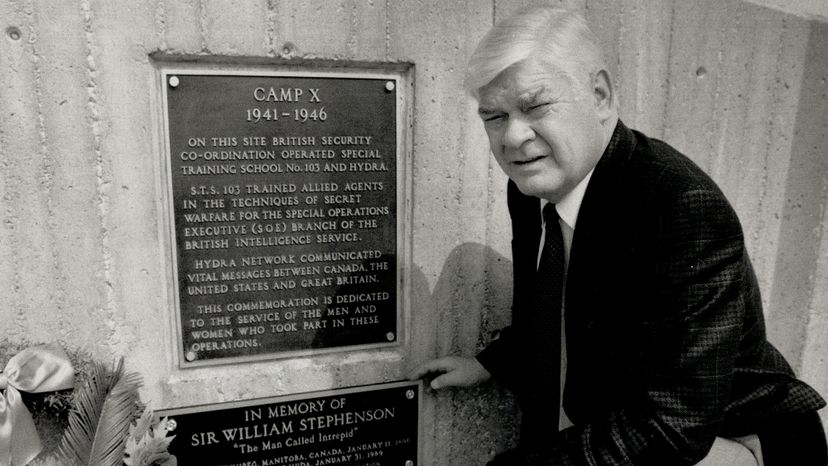
Today, Intrepid Park (named afterward William Stephenson's wartime moniker) marks the location of Camp X. The park is only a sliver of the original 260-acre (105-hectare) site, which is covered by warehouses. A plaque commemorates the men who trained there and what they accomplished in the war, and every Nov a Canadian veterans' group holds a memorial on the site.
Lots More than Information
Author'south Note: How Camp X Worked
This was a fascinating slice of World War II history I'd never heard of, despite the site of Camp X being within a few hours' drive of my house. The details of the ruthless methods taught at the schoolhouse are awesome in the context of World War Ii, since they were being used to battle the Allies truly despicable fascist enemies. It's a scrap less heady when you consider how those methods were exported and transferred to back up the imperialist agendas of Great britain and the U.S. in the subsequent decades. History never happens in a vacuum.
Related Links
- How James Bond Works
- How the CIA Works
- How to Become a CIA Agent
- Alan Turing: Codebreaker
- Codes! Allied Cryptography in Earth War II
More Slap-up Links
- Camp-10 Official Site
Sources
- Bicknell, Robin (producer) & Alex McIntosh (director). "World War Two Secret Spy Schoolhouse." yap films. 2014.
- Calzavara, Rebecca. "Remaining Campsite X building in Whitby, Ont." The Chronicle. Oct. 28, 2016. (May 22, 2017) https://chronicle.durhamcollege.ca/2016/ten/remaining-army camp-x-building-whitby-ont/
- Camp-x.com. (May 15, 2017) http://www.camp-x.com/camp-10.html
- CBC. "Igor Gouzenko obituary." June 29, 1982. (May 20, 2017) http://www.cbc.ca/athenaeum/entry/gouzenko-obituary
- Chambers, Joh Whiteclay 2. "OSS Grooming in the National Parks and Service Abroad in Earth War Ii." U.South. National Park Service. 1998. (May 16, 2017) https://www.nps.gov/parkhistory/online_books/oss/
- CIA. "What was OSS?" (May 17, 2017) https://www.cia.gov/library/publications/intelligence-history/oss/art03.htm
- Clibbon, Jennifer. "A fallen hero, a daughter left behind." CBC News. May 4, 2010. (May 24, 2017) http://www.cbc.ca/news/canada/a-fallen-hero-a-girl-left-behind-one.932847
- Montgomery, Marc. "History: Dec 6, 1941 – War, spies, even James Bail." Radio Canada International. Dec. six, 2016. (May 15, 2017) http://www.rcinet.ca/en/2016/12/06/history-december-half-dozen-1941-war-spies-even-james-bail/
- Parks Canada. "Secret Intelligence Activities at Camp X." (May 17, 2017) http://www.pc.gc.ca/APPS/CP-NR/release_e.asp?bgid=1790&andor1=bg
- Rigden, Denis. "How to exist a Spy: The Earth War 2 SOE Training Manual." Dundurn. 2004.
- Surreptitious Intelligence Service. "SIS: Our History." (May xvi, 2017) https://www.sister.gov.uk/our-history.html
- Stafford, David. "Camp X." Dodd, Mead & Company. 1987.
- The Washington Post. "John Bross Dies at 79." Oct. 17, 1990. (May 15, 2017) https://www.washingtonpost.com/annal/local/1990/x/17/john-bross-dies-at-79/473069e8-372d-426f-8f55-adfbb5194f22/

Does Phone Have To Have 720 X 1280 To Work With Pokemon Go,
Source: https://science.howstuffworks.com/camp-x.htm
Posted by: pennywilsock.blogspot.com
0 Response to "Does Phone Have To Have 720 X 1280 To Work With Pokemon Go"
Post a Comment